Fire stopping in Maidenhead
Close the gaps in walls and floors so a fire stays where it starts.
Get a priceFire stopping means filling a gap in a fire-resisting wall or floor with something that will hold for as long as the wall is meant to.
The wall might be rated for 30 minutes, 60 or 120. The seal has to match. A 60-minute wall with a 30-minute seal in it is a 30-minute wall.
That is why a tube of ordinary sealant or a squirt of builder's foam does not count. Neither has been tested in a fire. The products we use have.
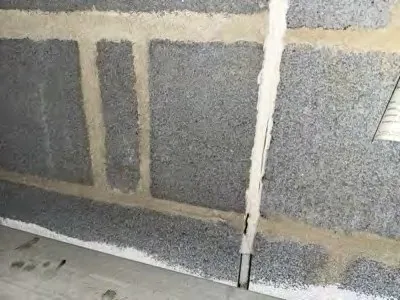
The gaps we find
Pipes that go through a wall with a ring of open space round them, because the hole was drilled bigger than the pipe.
Cable bundles pushed through a riser floor. New ones get added on top of old ones, and the first lot are never sealed.
A duct through a block wall, with the lagging cut back and nothing packed round it.
Wall heads. The wall looks right from the corridor, but there is a finger-wide gap along the top where it never met the slab.
Vertical joints between blocks, and gaps round window and service openings.
How we choose the product
Three questions decide it.
What goes through the gap? A copper pipe, a plastic pipe, a cable tray and a steel duct all behave differently in a fire.
What is the wall or floor made of? Blockwork, plasterboard on studs and a concrete slab each have different tested seals.
How long does it have to resist fire? That comes from the building's fire strategy or your assessor's report. If nobody can tell you, say so, and we will help you find out.
The answers point to one of four families of products. Batts and coated board for large openings. Collars and wraps for plastic pipes. Mastic for small gaps and joints. Cavity barriers for hidden spaces.
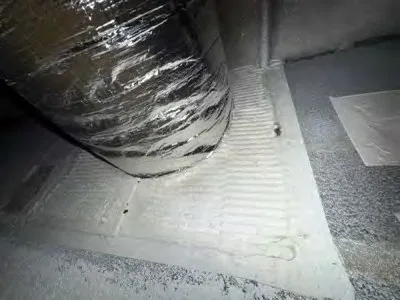
What you get at the end
A schedule of every seal, with its location, the product and a photo. We keep the numbers the same as on any survey or assessor's list, so the paperwork lines up.
The work is done by our BM TRADA / FIRAS-certificated contractors. FIRAS is the scheme for fire stopping installers, and a third-party certificate is what many insurers and assessors want to see.
When a survey comes first
Nobody has counted the gaps yet? A compartmentation survey does that. You then price the sealing from a numbered list instead of a guess.
Already holding a report that names them? Send it over and we will work from the line numbers.
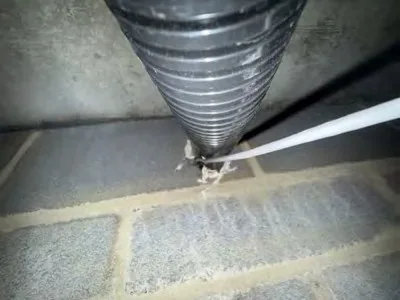
A rough idea of price
As a rough minimum, our jobs start at about £2,000 plus VAT. That is what it takes to make a day's drive from Luton worth it for a crew of two.
After that the price follows the count. How many openings, how wide each one is, how high up the ladder has to go.
Send a few photos and a rough number of holes. That is usually enough for a first figure, which we confirm in writing before anyone turns up.
Questions we get asked
Do I need Building Regulations sign-off?
That depends on the work. Putting back a seal that was always meant to be there is not the same as altering the building. If you are unsure, ask your building control body before work starts.
Can you seal gaps in a listed or old building?
Often yes, but the product and method need care. Tell us what the wall is built from and what it is lined with.
Is that the same as a cavity barrier?
No. A cavity barrier shuts a hidden space. Fire stopping closes the hole where something passes through. The cavity barriers page covers the first.
Tell us what is going through it and what the wall is made of. We will come back with a price.
Get a price