Penetration sealing in Maidenhead
Pipes, cables, trays and ducts through fire walls and floors, sealed to the rating of the wall.
Get a priceHere is a made-up cupboard, so you can see how a job goes. It is an example and not a real building.
A plant cupboard on a first floor corridor. One 100mm block wall, rated for 60 minutes. Through it go a 110mm grey plastic waste pipe, a 22mm copper pipe, and a steel tray carrying about thirty data and power cables. The wall was cut with a hole 400mm wide and 200mm high for the tray. Nothing has been put back round any of them.
The three seals
The waste pipe is plastic, so in a fire it softens and burns away. It gets an intumescent collar on each face of the wall, screwed to the block with the fixings the collar's test sheet names. The collar swells and squeezes the melting pipe shut.
The copper pipe passes heat to the far side and does not melt. It gets a pack of mineral wool round it, and a bead of fire-rated mastic over the wool on both faces.
The tray is the big one. The 400 by 200 opening is stuffed with coated mineral wool batts, cut tight round the tray and its cables, then painted with the coating on both faces. Thin gaps at the batt edges are closed with mastic. Where the cables fan out, we leave the batt a little proud so nothing rubs on it.
What the record says
Each seal gets a tag and a line in the schedule. For this cupboard it would read like this.
Seal 14. First floor plant cupboard, north wall. 110mm PVC waste pipe. Collar both faces, 100mm block, 60 minutes. Photo 14a before closing, 14b after. Fitted by our BM TRADA / FIRAS-certificated contractors.
Seal 15 is the copper pipe. Seal 16 is the tray, with the batt thickness and coating noted, and a spare line for the next cable.
Why the wall decides
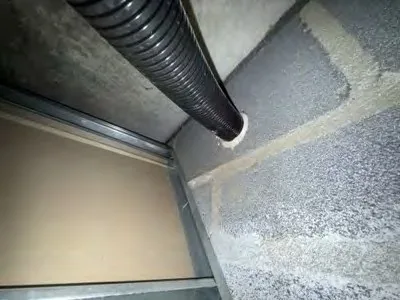
The same pipe through plasterboard on steel studs would need a different collar and different fixings. Through a concrete slab, a third. A seal is tested in one wall type at one size, and we match the job to that test.
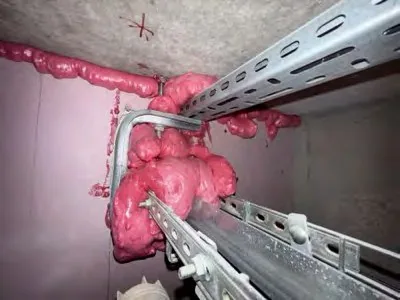
Foam is used where the shape makes batts awkward, for example round steel brackets. It has to be fire-rated foam, usually pink or red, and not the builder's kind that burns.
Where cables will be added later, pillows or bags are fitted that can be opened and closed again.
Things we find
A 60mm gap round a plastic pipe filled with ordinary foam. Tidy, and useless.
A batt with a hole poked in it for one more cable.
A duct with its lagging cut back at the wall, bare where it goes through.
What we need from you
One photo of the whole opening with a tape measure across it, and one of the wall. If you know the rating, say so. If not, we will say what we see and you can check the drawings or ask your assessor.
Questions we get asked
Can you seal around cables I still need to add to?
Yes, with pillows or bags that reopen. Tell us before the work so we choose them.
Do you replace damaged seals?
Yes. Photos of the damage are enough to start with.
Tell us what is going through it and what the wall is made of. We will come back with a price.
Get a price